
I started off by showing a demo of a workflow I think will become common for Drupal agencies. You spend 15 minutes prototyping a website with AI, then convert it to a Drupal site with the help of AI and a skilled developer in a matter of hours.
But it can also be a real challenge. The volume of contributions is going up while the quality is going down. More patches are landing on a small group of maintainers, and reviewing low-quality code wastes their time.
Site templates and the marketplace
Aidan Foster, who has been running Foster Interactive for 17 years, chose to go all in on the Drupal AI Initiative instead of staying on the sidelines. Together with his team, he is rebuilding the foundations of his agency to leverage AI and prepare for what is next.
But what happens when AI disrupts all three sides at the same time? In my keynote, I showed how we are responding.
AI for site building
Second, I showed a proof of concept for dynamic contexts, where the Context Control Center pulls in real-time data from Google Analytics to help improve content performance after publication.
If you’re using AI to contribute, you are responsible for what you submit: don’t submit code you don’t understand. Our quality standards matter, and we will uphold them.
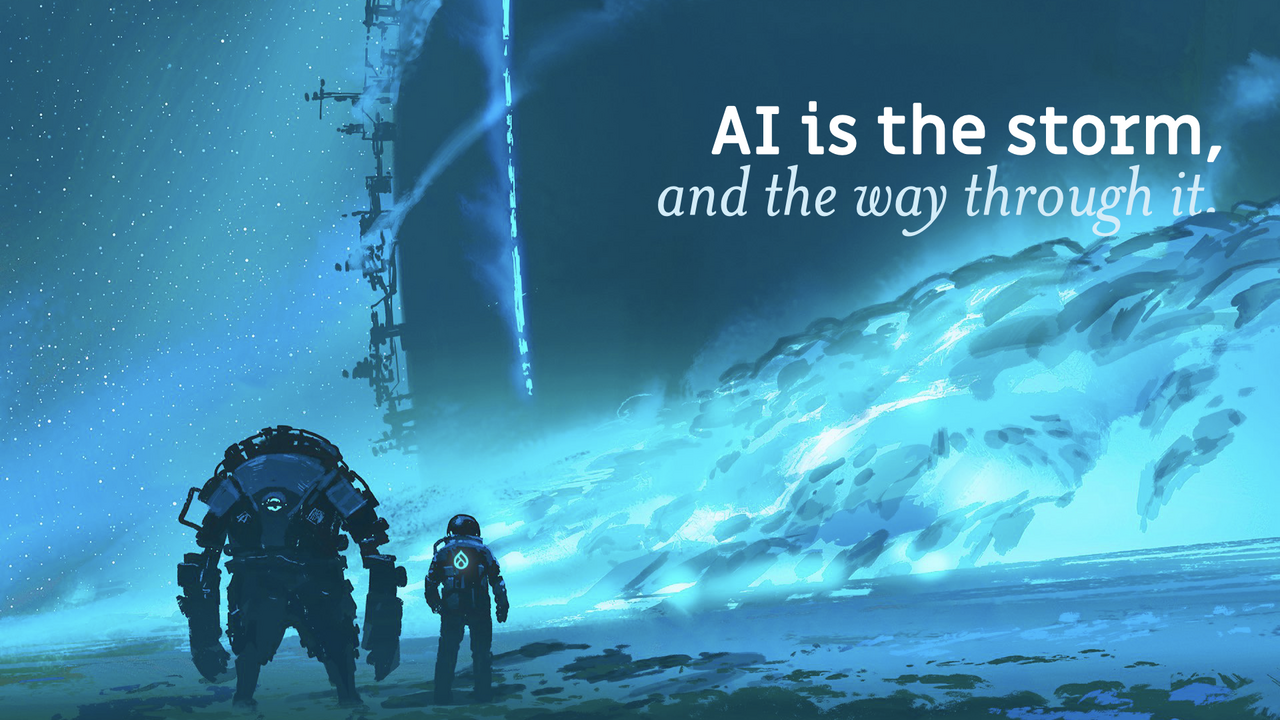
AI is the storm, and AI is the way through the storm. I said that first in Vienna. Six months later, I believe it more than ever. Not as a slogan, but as something I have watched happen. We need more people like Aidan and Jürgen. If you want to get involved, join us on Drupal Slack or attend DrupalCon Rotterdam this fall.
For more than 20 years, Drupal’s ecosystem has rested on a stable triangle: the platform itself, digital agencies who bring Drupal into the real world, and the community that builds and maintains it. That triangle has proven remarkably resilient through many waves of new technologies.In Chicago, I showed eleven site templates available in a basic marketplace at marketplace.drupal.org. All eleven can be installed directly from the Drupal CMS installer.
In my keynote, I also told the stories of two community members who embraced AI in a meaningful way.
AI for content management
AI gets you to a prototype fast. Drupal gives it the foundations that last.
If you missed the keynote, you can watch the video below or download my slides (32.6 MB).
This year, Drupal turned 25. DrupalCon Chicago felt like the right place to mark that milestone. My keynote was part celebration and part wake-up call. I talked about Drupal’s foundations, how AI is putting pressure on them, and why I believe we can rebuild them stronger than before.
The idea is straightforward: AI agents need good context to help manage tasks in Drupal. With the Context Control Center, teams define their brand voice, target audiences, key messages, product details, and editorial guidelines in one place. Then every AI agent on the site draws from this single source of truth. The result is that you create knowledge once, and scale it to all the pages and content on your website.
Saying no to AI slop
AI is lowering the barrier to contribute to Open Source projects like Drupal. On paper, that sounds great. More contributors, more patches, more momentum.
In my keynote, I showed two demos of the Context Control Center in action. First, Drupal’s AI agents turn a simple marketing brief into a complete, on-brand page using Drupal Canvas, consulting the Context Control Center along the way. It followed brand rules, asked clarifying questions, generated structured data for search, and added cross-links.
I want to extend my gratitude to everyone who contributed to making my presentation and demos a success. A special thank you to Adam G-H, Aidan Foster, ASH Sullivan, Christoph Breidert, Cristina Chumillas, Emma Horrell, Gábor Hojtsy, Gurwinder Antal, James Abrahams, Jurgen Haas, Kristen Pol, Lauri Timmanee, Marcus Johansson, Martin Anderson-Clutz, Pamela Barone, Scott Falconer, Tim Lehnen. Many others contributed indirectly to make this possible. If I’ve inadvertently omitted anyone, please reach out.
Drupal Growth Initiative
Having a great product is not enough. We also need to tell a great story. As we approach an important readiness milestone by DrupalCon Rotterdam this fall, the Drupal Association is ready to take marketing to the next level.
At DrupalCon Vienna, I introduced the Context Control Center as a rough prototype. Since then, we have added many features. It is now nearly production-ready.
- Enterprise Drupal growth
- Drupal CMS adoption
- AI leadership
Our craft always evolves
The world is being flooded with AI-generated average. Average is cheap now, but expertise remains hard-earned and valuable. This community has spent 25 years building it, and that is not something AI can replicate.
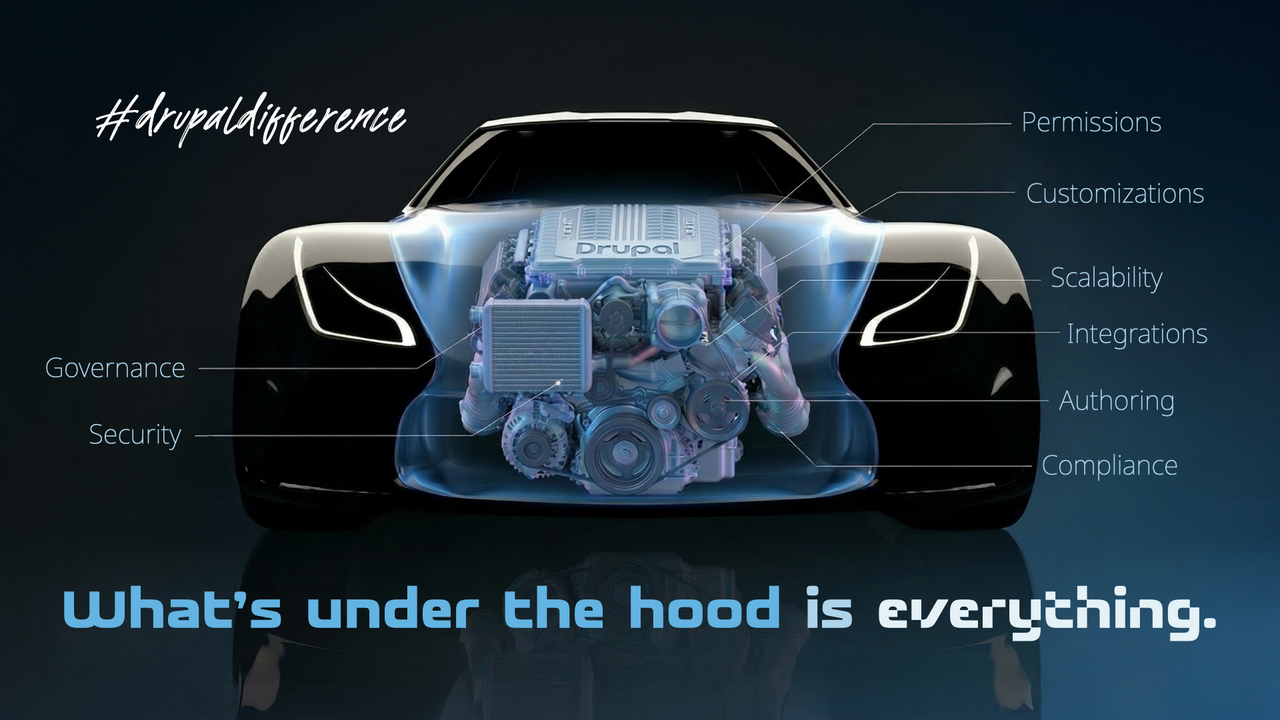
Organizations will always need real workflows, permissions, security, scalability, integrations, compliance, and governance. Drupal is a great platform for this.
About a year ago at DrupalCon Atlanta, I introduced the idea of site templates and a marketplace to go with them. By DrupalCon Vienna, we had one site template, but no marketplace.
And Jürgen Haas, a longtime contributor and creator of the ECA module, used AI to move at the speed of a team and make Drupal’s ECA module much easier to use. In both cases, AI amplifies expertise. It does not replace it.
We are launching a Drupal Growth Initiative organized across three tracks:
The demo worked because Drupal CMS ships with Drupal Canvas, which includes both CLI tools and AI skills. But the real magic comes from Drupal’s foundations: the APIs, building blocks, and architecture we have developed over 25 years. This is the accidental AI advantage I talked about before. Drupal really is the best CMS for AI.


