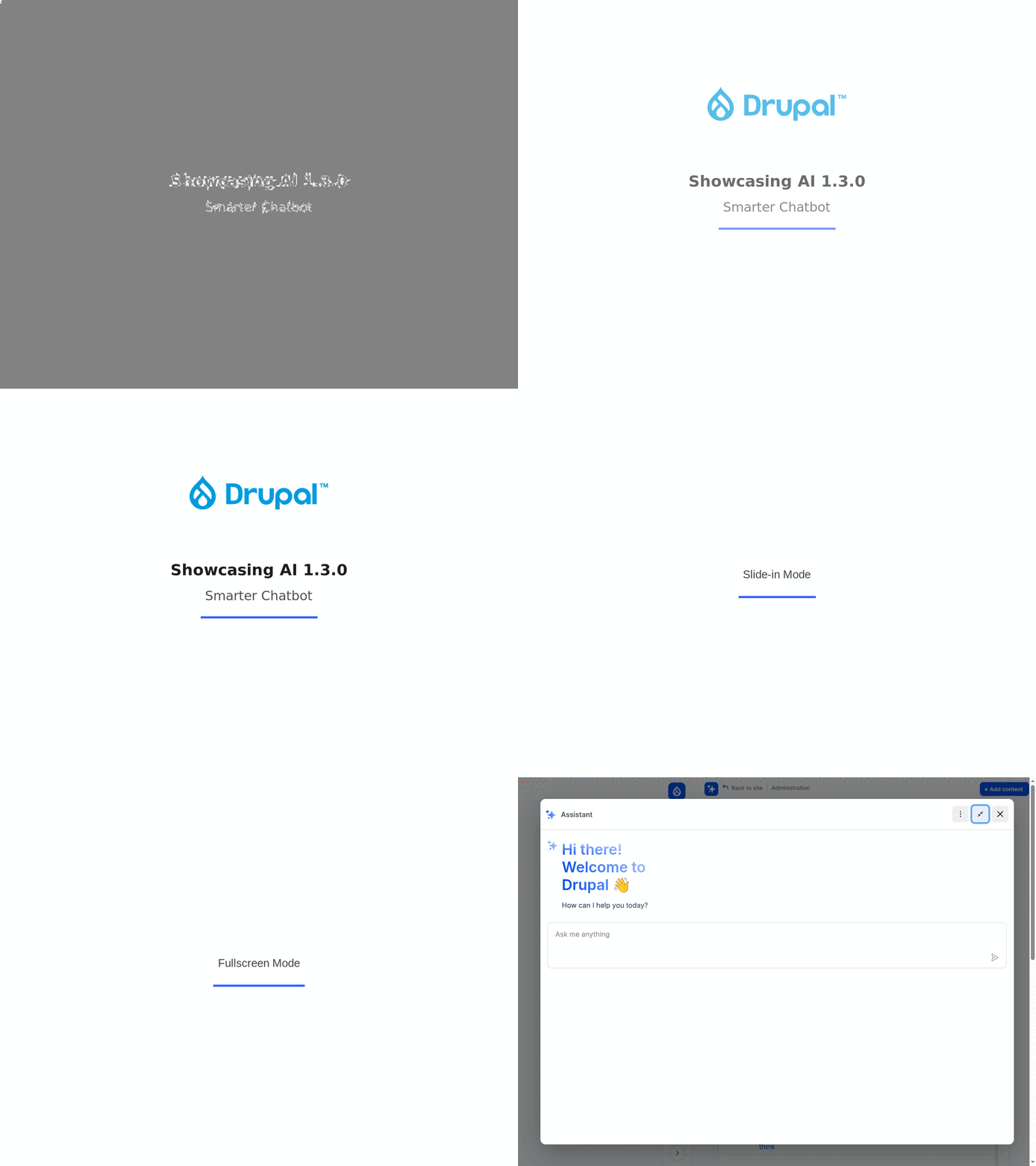
The new elements include:Open the chatbot via slide-in or full-screen mode, allowing the editor to choose the interface that best fits their workflow.
- Keeping AI safe and accountable
- Making AI useful for content teams
- Giving technical teams the visibility they need to operate AI in production with confidence
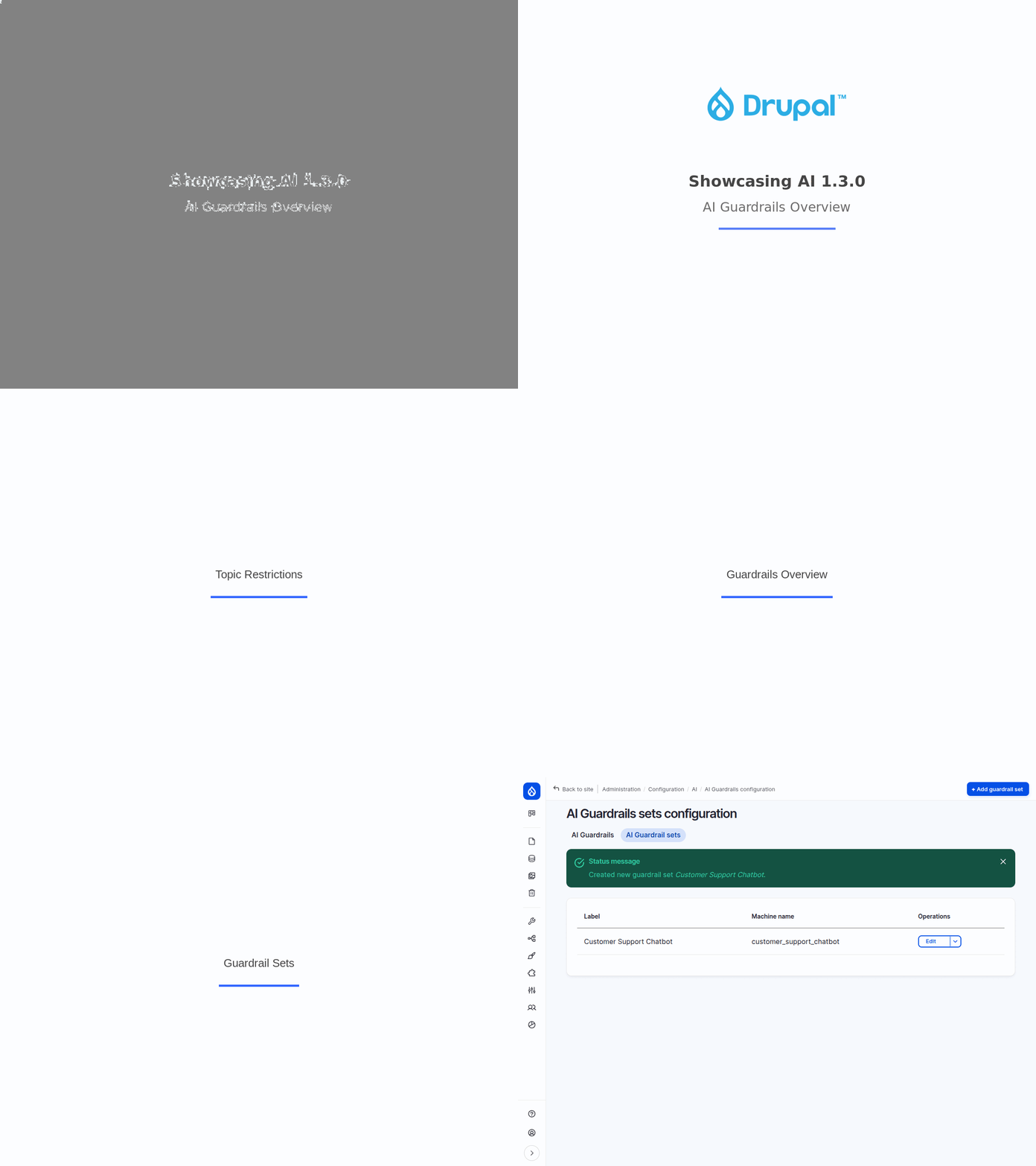
Trust is the foundation of responsible AI adoption. Drupal AI 1.3.0 introduces AI Guardrails, configurable checks that run before or after any AI request.
AI Guardrails: stay in control of every AI interaction
AI can be governed, integrated into everyday publishing workflows, and monitored in production as part of the platform.
One-click AI for editors, right where they work
Drupal AI 1.3.0 shows that these problems can be handled directly within Drupal.
Object Detection identifies objects in images using traditional machine learning models. The AI Validations module already uses this to verify image content automatically.
All operation types work with compatible providers, allowing organisations to change models without rewriting integration code.
Summarize uses lightweight summarization models instead of full language models, reducing cost and processing time.
Drupal AI 1.3.0 includes a set of reusable form elements designed specifically for AI workflows.
These components provide consistent interfaces for working with AI providers, prompts, and structured outputs.
Guardrails work across all AI operations in Drupal. This gives security and compliance teams a single place to oversee how AI is used across the site.
AI should meet editors in their workflow, not force them into a separate tool.
- Generate images from text descriptions and attach them as media
- Create structured FAQs from existing content
- Extract addresses from images using AI and Google Places
- Plot data from a CSV into a chart field
- Generate audio summaries with text-to-speech
- Auto-fill metadata such as telephone numbers and office hours from unstructured text
- Evaluate whether the content is ready for publication and update its moderation state
Field Widget Actions now provide a flexible framework for AI-assisted editorial tasks. AI Content Suggestions remains available as a contrib module for teams that want to continue building on that approach.
This post highlights the major additions. For the complete list of changes, bug fixes, and improvements in 1.3.0, see the full release notes on drupal.org.
A smarter, more flexible chatbot
Read more articles about Drupal AI.
Teams can define rules to control how AI interacts with their content and data. For example, they can block sensitive data from leaving their organisation, filter harmful responses, or enforce compliance policies. All of this can be configured without writing code.
Drupal AI remains open source and provider-agnostic, allowing organisations to integrate AI capabilities while maintaining control over their infrastructure, data, and model choices.
- Make this title more engaging
- Summarise this article for social media
Running AI in production requires visibility into how systems behave. Drupal AI’s observability module exports spans, traces, and metrics through OpenTelemetry, the industry standard for application monitoring.
Better tools for developers and site builders
Combined with the exclude-tags feature for logging, organisations also gain fine-grained control over what information is recorded and what remains private.
Drupal AI 1.3.0 introduces Field Widget Actions, one-click AI workflows attached directly to content fields.
- Markdown editor with WYSIWYG, diff view, and Word paste compatibility
- Mentions autocomplete, allowing users to type @ or { to insert prompt variables
- Provider Selector, a unified interface for selecting AI providers
- JSON Schema editor with validation for structured output configuration
- Chat History viewer that mirrors the conversational interface of modern AI playgrounds
Editors can now:
New AI operation types: rerank, summarize, detect
AI Validations will use the Object Detection operation type going forward, while still allowing different validation modules to build on the same abstraction.
In practice, this means AI governance becomes part of the platform itself, rather than something teams must manage separately.
This allows engineering teams to monitor AI agent decisions, track usage and cost, and audit AI interactions across their sites.
And because Drupal AI is open source, you stay in control of your models, your data, and your infrastructure.

Production-grade AI observability
Drupal AI 1.3.0 is now available, delivering the largest feature update since the module’s initial release. This version focuses on three areas that organisations told us matter most:
These changes simplify the core architecture while leaving room for contrib modules and alternative implementations.
Drupal AI’s provider-agnostic architecture continues to expand with three additional operation types.
Because the chatbot receives the current page context, its responses relate directly to the content on the screen.
Custom loading messages replace generic spinners, allowing site builders to provide clearer feedback while AI requests are processed.
A maturing platform: consolidation and clear direction
Rerank reorders search results or document lists based on relevance to a query. This is particularly useful in retrieval-augmented generation workflows.
As organisations begin building AI-powered features in Drupal, developers need tools that simplify configuration and reduce boilerplate.
The chatbot receives page context, meaning it understands the content currently being viewed or edited.
Editors can ask questions such as:
AI in a CMS brings practical challenges around governance, editorial workflows, and production visibility.
Teams are able to connect this data to platforms such as Datadog, Grafana, Sentry, or any OpenTelemetry-compatible system.
Closing the Loop
AI Translate gives way to TMGMT (Translation Management Tool), aligning AI-assisted translation with Drupal’s standard translation workflow.
Editors often need quick assistance while working on content. The built-in Drupal AI chatbot has been expanded to support this directly within the editing experience.
Authors: Will Huggins, Jeremy Chinquist
Get started
Each action is backed by a customisable workflow allowing site builders to tailor AI behaviour to their organisation’s needs and editorial standards without writing code.
Full release notes
Configuration files have also been improved. Prompts are stored in a human-readable format rather than single-line strings, making code reviews easier and reducing merge conflicts when teams collaborate on AI workflows.
Drupal AI 1.3.0 also simplifies parts of the platform.